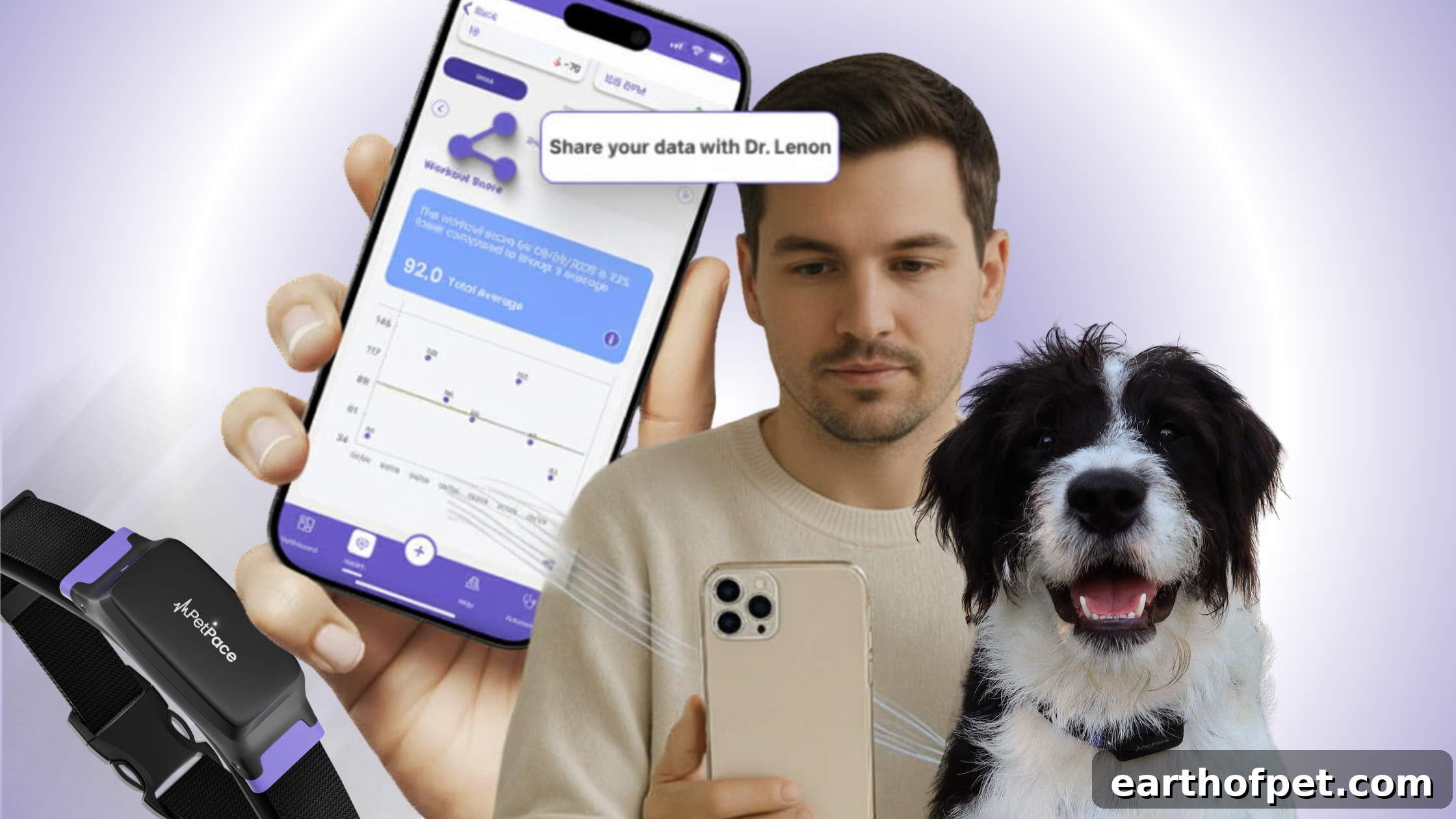
When your dog isn’t feeling well, one of the hardest parts of a veterinary visit is explaining subtle changes you’ve noticed at home. Small shifts in energy, breathing, appetite, sleep, or posture can be hard to describe from memory. PetPace eliminates much of that guesswork by continuously monitoring your dog’s vital signs and activity, then letting you share those measurements with your veterinarian for clearer, data-driven care.
This article explains why sharing PetPace data with your vet matters, what information the system provides, how to securely share data from the PetPace mobile app, and how continuous monitoring supports better treatment decisions.
Why Share Your Dog’s PetPace Data With the Veterinarian?
Sharing PetPace data gives your veterinarian access to a continuous record of your dog’s health instead of relying only on snapshots from clinic visits. The PetPace collar tracks vital signs and behavior 24/7, including heart rate variability, respiration rate, temperature, activity levels, sleep patterns, posture, and movement. AI-generated alerts and insights highlight deviations from your dog’s normal ranges so both pet owners and clinicians can spot trends sooner.
When you connect and share data through the PetPace mobile app, your vet sees the same trend graphs and alerts you see at home. That shared view provides context across days and weeks, helping vets interpret symptoms, prioritize tests, and tailor follow-up care based on real-life patterns rather than a single exam.
How to Share PetPace Data with Your Veterinarian
Sharing your dog’s health data with a clinic is straightforward and secure through the PetPace mobile app.
Step 1: Obtain a Clinic Access Code
Your veterinarian registers for the PetPace Veterinarian Platform, a free web portal that allows clinics to view shared collar data. After registration, the clinic will provide you with a unique access code to link your dog’s collar to the clinic’s account.
Step 2: Open the PetPace Mobile App
On your smartphone, open the PetPace mobile app that is paired with your dog’s collar. The app holds the health data your collar collects and provides the sharing options.
Step 3: Use the “Share with Vet” Option
From the app dashboard, tap the “+” icon and select “Share with Vet.” This initiates the process to connect your dog’s data to the clinic’s PetPace account.
Step 4: Enter the Clinic Code
Enter the unique access code supplied by your veterinarian and confirm. Once the clinic approves the request, your dog’s collar data begins syncing to the veterinarian portal so the vet can review trends and alerts.
Step 5: Veterinarian Review
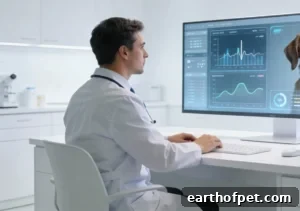
After sharing, your veterinarian can access your dog’s health information through the PetPace veterinary dashboard. The clinic can view vital sign trends, activity and sleep patterns, pain and stress indicators, historical records, and AI-generated alerts that flag readings outside normal ranges. Both you and your vet will be looking at the same continuously updated health record.
What Information Does the Vet See?
When data is shared, the veterinary dashboard shows daily and weekly trend graphs, color-coded alerts, and detailed timelines of vital measurements. The main elements available to the clinic typically include:
- Heart rate and heart rate variability trends
- Respiration rate
- Skin temperature trends
- Activity and sleep summaries
- Posture and movement patterns
- Pain and stress indicators and index scores
- AI alerts and historical timelines for context
Vets can view high-level summaries for a quick assessment or drill down to individual data points when a detailed review is needed. Having continuous home-monitoring data helps clinicians connect events and patterns that might not be apparent during an in-clinic appointment.
How Shared Data Improves Treatment Decisions
Access to continuous data aids clinical decision-making in several ways. For example, your veterinarian can:
- Monitor how a dog responds to medication adjustments over days or weeks
- Track recovery and activity changes after surgery or illness
- Evaluate shifts in mobility or daily activity that suggest joint or pain issues
- Observe changes in sleep quality or stress indicators that might relate to behavior or medical conditions
Objective trend changes — such as more stable respiration, improved heart rate variability, or increased restful sleep — give vets measurable evidence of improvement. Conversely, early detection of negative trends can prompt quicker adjustments to treatment or follow-up testing.
Why Continuous Monitoring Gives a Bigger Picture
Traditional veterinary visits are vital but represent a short snapshot in time. Continuous monitoring reveals how your dog’s body functions during normal life: resting, playing, sleeping, and exploring. Over weeks and months, long-term data can reveal gradual changes such as a rising resting heart rate, decreasing activity, worsening sleep quality, or increasing stress signals. Detecting these trends early can make it easier for veterinarians to investigate and intervene before issues become more serious.
Does My Vet Need Special Equipment?
No special hardware is needed. The PetPace veterinary portal is accessible via a standard web browser, so clinics can review shared data from their existing computers without installing additional software. PetPace also provides support to help clinics set up and use the portal if needed.
Working Together for Better Pet Health
Sharing your dog’s PetPace data creates clearer, more productive conversations between pet owners and veterinarians. Rather than relying solely on memory or isolated measurements, both parties can review the same continuous health record. The intention is not to replace routine veterinary care, but to supplement it with ongoing, objective insights that make diagnosis, monitoring, and treatment more effective.
With daily health data available when needed, you and your veterinarian can collaborate from a shared set of facts to better understand changes and support your dog’s long-term wellbeing.